

Not all supernormal effects are considered to be PSI… but all PSI effects are considered to be supernormal.
What we are referring to regarding supernormal effects that aren’t technically PSI are strange effects that reside within the confines of the human body. Examples of this would be the many strange effects that have been exhibited by long-time yogic/meditative practitioners such as differentially modulating the temperature of both sides of their palms, increasing the temperature of fingers and toes over 46 degrees°F, and significantly modulating one’s heart beat from as slow as 4 beats per minute to 300 beats per minute (Manjunath et al., 2024). In more recent times, the feats of Wim Hof and those that practice his method have been validated regarding autonomic nervous system control and immune system influence (Kox et al., 2014).
Additional examples of the supernormal that aren’t technically PSI have been observed from hypnosis. The intriguing aspect of hypnosis is that strange phenomena can occur without the need for subjects to practice hypnosis for any significant amount of time if at all. Similarly to the long-term yogic/meditative practitioners, hypnosis in combination with visualization/intent has been observed to induce the ability to influence specific temperature changes in extremities (Douglas et al., 2014). Another interesting phenomena observed from hypnosis combined with intent is the dissipation of warts (Ewin et al., 1992). Significantly accelerated healing reactions for severe burn victims and even stroke victims have also been observed when inducing hypnosis with instructions to heal immediately following hospital admittance (Ewin, 1986; Sanyal et al., 2021). Much of the clinical research over the past several decades regarding hypnosis has been in the field of chronic pain. However, there have also been case studies of extreme pain suppression/modulation via hypnosis regarding the removal of molars without chemical anesthesia (Abdeshashi et al., 2013; Facco et la., 2021). Even stranger phenomena observed from hypnosis is the ability to induce growth or regrowth of body parts such as breasts in adult women and hair growth for subjects with alopecia based on visualization instructions over several weeks (Williams et al., 1973; Willard et al., 1977; Staib et al., 1977; Hosking et al., 2018).
While hypnosis has a controversial reputation being that the technique is used in such a wide range of application from stage shows to clinical pain management, there are a multitude of neuroimaging studies that indicate distinct, consistent changes to a subject’s brain while under hypnotic trance (Ayaz et al., 2022). There appears to be a reliable observation that supernormal abilities arise during the trance state when combined with hyperfocused intent/visualization whether it be yogic/meditators or subjects under hypnosis.
In the piece titled, “The greatest $1 million marketing campaign in history”, we outlined magician James Randi’s efforts to discredit the field of PSI. However, his efforts didn’t stop at PSI and he also went out of his way to attempt to discredit the supernormal as well. On November 3, 1987 Randi would make an appearance on the Johnny Carson show to showcase that he could fool nurses into thinking he had the ability to alter his heart rate at will. Randi would mention a yogi who had performed this feat in recent times pointing that the yogi had likely used trickery to fool the researchers involved in the case study. We assume that he went out of his way to do this based on the idea that if enough attention was drawn to supernormal abilities… that the segway to PSI abilities would require less of a leap in logic for public adoption.
It’s quite amusing to think that Randi was so adamantly opposed to the publicity of the human potential that he would even attempt to “debunk” supernormal abilities that are very well documented today. The autonomic nervous system (ANS) is the component of the peripheral nervous system that regulates involuntary physiological processes such as heart rate, blood pressure, respiration, pupillary response, and glandular secretion. If you were to type in a variation of “meditation autonomic nervous system”, “yoga autonomic nervous system”, and “hypnosis autonomic nervous system”, in the Pubmed database, thousands of citations would arise. There is a robust amount of evidence indicating that these techniques allow for distinct influence over the ANS in manners unseen during normal baseline consciousness.
Interestingly, in 1974 Randi would encase himself in blocks of ice for 43 minutes and 8 seconds setting a Guinness World Record at the time. It seems clear that Randi was well aware of some of the underlying aspects of the human potential but chose to utilize his knowledge and abilities to quell public interest in the subject.
Back to the topic at hand regarding the “supernormal” and PSI.
What exactly differentiates the “supernormal” compared to PSI?
It appears that it simply boils down to abilities showcased within the body compared to abilities that are showcased extending beyond the body. The reason for this is based on the mainstream neuroscience perspective that all conscious experience is generated by the brain. This would indicate that if a person claims to have an Out-of Body experience (OBE), the ability to conduct “energy healing”, or purportedly the ability to move objects at a distance (telekinesis)… they are simply hallucinating these perceived occurrences. The idea is that if these abilities or experiences were scrutinized utilizing the scientific method, it would merely showcase delusions of the mind. While the supernormal abilities cited earlier can provide some confounding results, it is presumed that nervous system signaling provides the transportation for these outcomes regardless of how strange the effects may be. Although the mechanisms of the supernormal might not yet be fully understood, it provides great comfort to mainstream scientists that these abilities do not fully break the “rules of reality”.
Luckily due to our profound ignorance of all things physics, we are simply unaware of laws that cannot be broken… and if by chance they are broken, then we suggest the simplest solution is to re-write the laws for accuracy sake and move forward.
At least that’s our viewpoint.
No big deal.
From our perspective… the line between the begrudgingly accepted supernormal and highly polarizing field of PSI seems fairly thin. We say this because the physiological correlates of the supernormal and PSI appear to be extremely similar. We are referring to neural activity as well as the subjective state of trance, focus, and intent. The main difference being that PSI doesn’t have the externalized nervous system to carry the information to a distant object to induce said effect.
An example of this thin line would be the ability to utilize a deeply relaxed state in combination with vivid visualization of a fire in one’s palm to induce a change in hand temperature. You can use the below audio instructions if you’d like to try firsthand.
The PSI version of this would be to utilize the same exact level of trance and nearly the same exact visualization but instead of focusing on one’s own hand, the target visualization extends somewhere outside of the body. While it requires a leap of faith and essentially getting out of one’s own logical brain, strange effects can happen.
One of the least controversial examples of an aspect of our physiology that extends beyond the body is brain measurements utilizing magnetoencephalography (MEG). While EEG is composed of electrodes placed directly on the scalp that measure micro-electric currents correlating with changes in brain activity, MEG doesn’t actually touch the scalp and measures tiny magnetic fields produced by the brain (2 to 4 centimeters away). This within itself is hardly proof of PSI or any telekinetic properties but it does quantify that the human body can exhibit weak magnetic fields that extend over an inch beyond the skin. Whether this weak magnetic field can expand beyond inches and whether it can carry specific information is another topic altogether.
This brings us to the analysis of PSI abilities and their perceived difficulty levels.
There are 5 areas of PSI abilities that we will rank from 1 to 10 in terms of difficulty (1 being easiest, 10 being the most challenging): Energy Projectors, Remote Viewing, Mindsight, Telepathy, & Telekinesis.
“Energy Projectors”
These are people who claim to be able to have an effect on physical matter outside of their bodies. While the term “energy healer” is much more common, “projector” is a more accurate term as the quantification of “healing” due to the energy projection is less quantifiable. If we refrain from using the word “healing” then we can design proper controls to measure and quantify energy projection. One of the variables regarding any endeavor, not just PSI is that the involvement of more than one person adds a layer of variability unseen in endeavors with a focus on a solo practitioner.
One of the quantification protocols we have been discussing in recent times with a few neurophysiologists is whether EEG channels can be attached to a styrofoam head and can still pick up electrical signal changes. According to them, it is possible and therefore might offer an optimal protocol for quantifying the effects of “energy projection” without the need for a second subject. Theoretically, the signal capture of the EEG electrodes on a styrofoam head would be flat or constant until the “energy” was projected onto the head and the signal would change. The proper distance between the “projectors” hand and the electrodes on a styrofoam head to quantify a PSI effect would need to be agreed upon… we are guessing that anything over 7 or 8 inches would suffice.
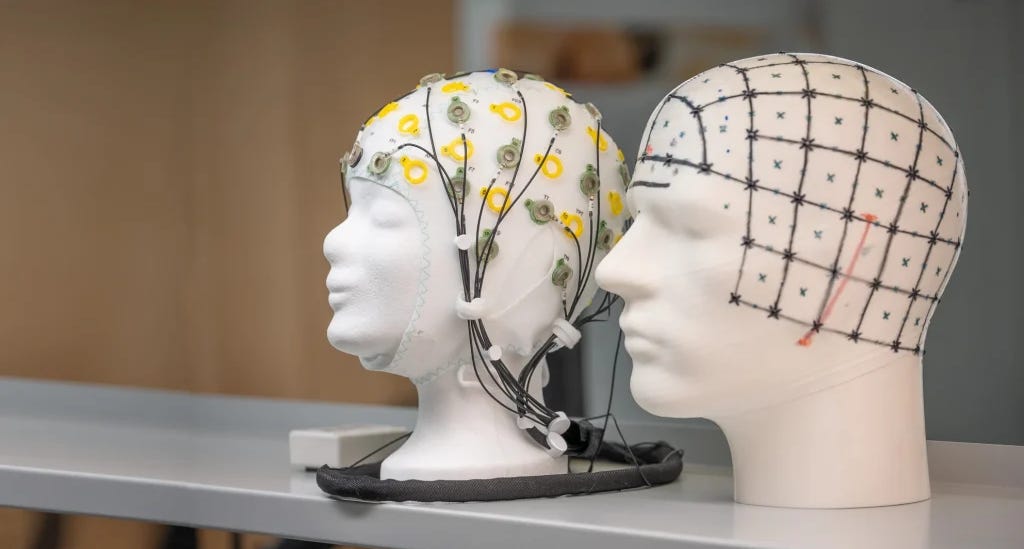
When analyzing “energy projection” compared to other PSI abilities, we believe that this is the easiest form of PSI to teach, replicate, and demonstrate. Our perspective is based on the notion that “energy projection” does not require the pin-point accuracy of Telepathy between two people nor does it require the seemingly drastic level of energetic force to display telekinesis. This is a form of PSI that offers some wiggle room for a slightly unfocused mind. From our exposure to this field of “energy”, it appears to coincide with visualization/intent as well as increased amplification if conducted in a hypnotic trance-like state.
Difficulty Rank: #5
“Remote Viewing”
The field of RV has by far the most robust published research to date regarding the field of PSI. While RV has been well validated by meta-analysis statistical metrics, the actual process itself seems to vary between practitioners. In addition, the targets vary widely creating a sub-optimal form of quantification for accuracy. In some regards, the field of RV seems to have some overlap with that Mindsight being that both abilities claim to be utilizing senses outside of the traditional visual field. However, RV targets have traditionally seemed to be more complex while employing a sketchpad to describe the image while Mindsight targets are more straightforward (colors, shapes) and quantifiable via verbal feedback.
For display purposes, RV targets would need to be well defined and simplified in order to more easily quantify whether the viewer was able to accurately perceive it. Shapes such as circles, triangles, squares, and stars could be utilized. Interestingly, numbers and letters have reportedly added a different layer of difficulty or internal processing for some individuals. There seems to be a very wide range of RV capabilities and consistency among individual practitioners.
Difficulty Rank: #7
(A new documentary regarding Remote Viewing)
“Mindsight”
Mindsight is classified as the ability to perceive without utilizing one’s traditional visual field. There are currently still many questions regarding this field and exactly how perception is taking place. It is one of the more robust and emerging fields of PSI being that many practitioners across the world are teaching this ability with many focusing on instructing children.
One of the challenges is ensuring that subjects are not peaking through gaps underneath the mask and that legitimate “mindsight” is being utilized. Unfortunately many Mindsight platforms are not focusing on addressing this issue making it difficult to differentiate between legitimate and illegitimate efforts. The Center for the Unification of Science and Consciousness (CUSAC) group is focused on developing a training protocol utilizing a shield placed on top of the eye mask in order to ensure proper blockage of line of sight is provided.
One of the factors that skews the ability to rate the difficulty of this capacity is that this field is dominated by children. The ability for children to develop Mindsight has reportedly been extremely rapid which distorts the analysis. This is due to the fact that children aren’t as prominently involved regarding the other PSI abilities. It would not surprise us if children are naturally more inclined to develop all PSI due to their lack of robust development of the default mode network which appears to act a barrier between the self and the greater field of experience.
Interestingly, a skeptic hypnotist named Albert Nerenberg is currently exploring the utilization of hypnosis to accelerate mindsight capabilities in adults. This would theoretically make sense because hypnosis has been observed to reduce activity in the default mode network (DMN) (Jiang et al., 2017; Deeley et al., 2012). In essence, this reduction in DMN activity allows for a dissipation of the boundaries between the sense of self and the greater field of information (ZPF?).
Difficulty Rank #6
“Telepathy”
Telepathy is the PSI ability of being able to communicate with another person without utilizing any of the traditional 5 senses. In “normal” communication, synchronization of the brain occurs between the two subjects communicating (Stephens et al., 2010; Ahn et al., 2017; Luft et al., 2022). Telepathy would theoretically generate the same signal of synchronization between subjects when successful transfer of thought has occurred. The challenge in telepathy when compared to other PSI is that it involves two subjects instead of one. This adds another layer of challenges as both subjects must be able to perform optimally for proper transmission to occur.
From our experience, the transmission of specific information between subjects has a much higher degree of precision when compared to “energy projection”. If an image or word is transferred between subjects telepathically… either the result is correct or incorrect. There is no middle ground in terms of accuracy. The amount of concentration and focus required to replicate this ability sufficient times under high scrutiny is much greater than that of “energy projection”. This essentially means that utilizing telepathy display as proof of PSI is one of the most difficult endeavors to carry out.
Difficulty Rank #10
“Telekinesis”
Telekinesis is the purported ability to move objects without utilizing physical touch to do so. While many claim the ability to influence the movement of extremely light objects such as foil sitting atop a needle, this wouldn’t seem to suffice as evidence of telekinesis. Instead, objects with sufficient weight that cannot be manipulated by force generated by wind from hand movements are needed. The below display by Russian psychic Nina Kulagina under controlled conditions would likely need to be replicated. A glass barrier between the subject and the object being moved would be ideal if possible.
The rarity of true telekinetic displays are quite scarce seemingly indicating difficulty. However, the fact that it negates the need for a second subject brings down the difficulty level slightly. From what it appears, an extreme level of focus, energetic development, and dedication to practicing the ability is necessary for public display.
Difficulty Rank #9
—
While there are other forms of PSI reported in the scientific literature such as precognition, PSI dreams, presentiment, dice influence, Ganzfield, and others… these types of PSI are more difficult to quantify in terms of extreme displays in a short time frame for public display. Our framing of this piece is in regards to types of PSI that can be displayed to warrant something akin to the “Randi Prize”. With the recent interest in telepathy due to the podcast “Telepathy Tapes”, it’s a bit ironic that the most difficult form of PSI is the one most prominently marketed.
While some non-verbal autistic subjects might showcase consistent telepathic abilities when in private with their close, trusted family members, this doesn’t necessarily translate to public display of the ability under controlled conditions. This is why we believe understanding which specific type of PSI is most conducive for public display is an important endeavor. Based on our analysis, “energy projection” is the lowest hanging fruit being that it addresses a core issue of PSI… display of consciousness or intent beyond the body using established, commonly used laboratory equipment to quantify it.
Once this ability has been displayed at scale, it allows for the rules of reality to be rewritten opening the door for serious inquiry regarding all PSI.
P.S. “The brain manifestation of soul forces in the body” - “The Sleeping Prophet” Edgar Cayce. This is a quote that is alluding to the ability for a subject to influence their autonomic nervous system. It insinuates that during altered states of consciousness, the soul forces are accessible to influence the body in “supernormal” ways. From our perspective, it also alludes to these same altered states of consciousness as affording accessibility to soul forces coinciding with PSI abilities.
I know this is nearly unrelated to your fascinating article, but—Edgar Cayce is so fundamental in our understanding of the "supernatural" that I automatically become very attentive when I see or hear his name.