

MPI stands for the Model of Pragmatic Information which was originally authored by German physicist/psychologist Walter von Lucadou in 1995. It is a theoretical framework designed to explain PSI as having genuine yet subtle effects. It states that psi phenomena are non‑local correlations inside meaningful psycho‑physical systems, not signals going from A to B, and that whenever you try to turn those correlations into a reliable signal, they weaken, move, or vanish (Jhong et al., 2025).
This is a model based on all the research to date indicating that the effects of PSI when compounded over time generate a genuine but small statistical effect. We agree that based on the most comprehensive body of data in the field of PSI, MPI is on target. The major difference between MPI and our perspective is that MPI takes a comprehensive macro-analysis where as we are entirely focused on micro-analysis regarding the physiological correlates of the human potential. Before we proceed further, let us clearly define the formal definition of PSI as unexplained mental or psychic phenomena including extrasensory perception, precognition, and psychokinesis.
When we first began our foray into attempting to comprehend and reverse engineer the physiological correlates of the “supernormal”, we expected there to be a clear divide between the neural activity of PSI-related activity and baseline states of consciousness. However, the further we have probed this field, the divide between PSI and non-PSI physiological activity has become less clear cut.
For example, the concept of memory and recollection is considered to be a “regular” everyday waking occurrence. For the general public, there is nothing PSI related about recalling a memory from childhood or reliving the sporting event from last month. However, the mechanisms of memory aren’t fully understood with neuroscientists continually searching for the physiological unit of storage within the brain. Currently, there is no predominant theory regarding memory and many researchers have maintained the more generalized belief that the hippocampus (Lisman et. al, 2017; Roux et. al, 2021; Wiltgen et. al, 2010) is essential for memory while others will cite the prefrontal cortex in combination with the hippocampus as being the necessary structures (Yadav et. al, 2022). More exotic theories regarding memory storage include magnetite nanoparticles in the brain (Banaclocha et. al, 2010).
One of the interesting things about memory is that it seems that it can actually be developed to a very high degree through training. A colleague of ours, Nelson Dellis, is a 6X memory champion who utilizes consistent practice and techniques like visualization including the “memory palace” which turns abstract info into vivid, emotional images for better recall. While many people have difficulty memorizing a 10 digit phone number, Nelson has held the record for memorizing the most digits in 5 minutes… 339. He has also held the record for memorizing a deck of cards (52) in the fastest time… 40.65 seconds.
In a recent appearance on the Danny Jones Podcast, Nelson mentioned that in certain moments of intense practice, he has experienced a distinct sensation that left quite an impression on his perspective of the source of memory. This is an excerpt of Nelson discussing him training to remember the order of a deck of cards in under 30 seconds:
“And one time I did, this was Christmas 2012… and I got 29.74, I believe, as my time. And I was like, “Oh man, I broke it! I did it!” It was such a weird experience because I remember memorizing the deck… the experience of actually going through the deck memorizing it and I was like… there’s a part of my brain that was like… I’m not actively doing anything right now. I don’t feel like I’m memorizing anything, I’m just… it was like a flow state for memory… and it was done, I just knew it all. And it was the first time that I ever felt that I wasn’t a part of the memory process… that it was coming from somewhere else. It was weird, it doesn’t happen all the time but in these flow states especially with memory… you know but in these flow states, you know… you’re shooting basketball, everything goes in and you’re just kind of like mindless in the state of doing this… but with memory, it is all about your mind… but being away from your mind as your mind is doing something is a really trippy experience. And so in the last five years… we talked about this briefly but I’ve been more in touch with my spiritual side and and remote viewing (RV) and kind of having these PSI experiences and psychedelics and stuff… I’m pretty convinced that I don’t think all memory is coming from inside of the brain… that I think it’s just a receiver that there’s some substrate out there that has all information about everything including my personal memories and things that I’ve memorized and will memorize and I’m… just we are all able to tap in and out of that to get information.”
In speaking with Nelson, he has stated that PSI, RV, hypnotic, and psychedelic experiences feel distinctly similar when compared to moments of intense memory recollection. From our perspective, this is one example where the clear physiological distinctions between PSI and non-PSI are less definitive. The reason why memory is such an important aspect of the PSI discussion is due to the notion that if the brain is a receiver of information… where does the information reside and is there any distinction between where “regular” information is stored and “PSI” information is stored?
Our perspective is that one of the leading model’s of consciousness based on explanatory power is the “Orchestrated Objective Reduction” (Orch OR) theory developed by Nobel laureate physicist Roger Penrose and anesthesiologist Dr. Stuart Hammeroff in combination with the “Read-write head/Zero-point field” (ZPF) theory developed by German physicist Joachim Keppler. The combination of the models provides the quantum physiological interface in the form of microtubules with the ZPF which contains all information and experience (Keppler et al., 2025). According to Keppler, the brain is constantly accessing the ZPF which provides our experiences in a seamless manner.
Based on the combination of these models, when Mr. Dellis is performing regular memory as well as extreme feats of memory display… he is accessing the ZPF. Similarly, the RV, hypnotic, and psychedelic states are also accessing the ZPF. The source of information doesn’t change whether it is ordinary or non-ordinary. For whatever reason, the most commonly reported instances of PSIesque communication with the deceased and past-life recollection coincide with children under the age of 6, adults under hypnotic states, subjects undergoing psychedelic journeys, and during near-death experiences. The neural activity of the subjects experiencing these types of phenomena has notable differences compared to baseline consciousness but still relatively consistent among each other.
An interesting aspect of memory is that there are cases of recalling, “regular” memories that could be considered PSI-like. The concept of terminal lucidity (TL) in subjects with advanced neurodegenerative conditions is baffling to scientists across the globe. An example of TL is when a person suffering from Alzheimer’s who is incapable of remembering virtually anyone has a brief period of complete clarity just prior to their death. In these instances, the patients not only remember their loved ones but they also exude an emotional richness that had been absent for quite some time. This is all in the face of extreme neurodegeneration.
While TL is not considered PSI due to our ability to identify the original experience that is being recalled (family/friends), the mechanism of occurrence could be considered PSI-like being that it is considered unexplained mental phenomena. Another anomaly that occurs quite regularly among patients with terminal conditions is that of Deathbed Visions (DBVs). This is the occurrence of a patient nearing death that begins to experience interactions with the deceased with the theme of preparing to transition out of the body. Research in the field of DBV indicates that up to 88 percent of patients reporting at least one vision prior to death (Kerr et al., 2014). While DBV’s are not considered to be the same phenomena as psychics interacting with the deceased… the general theme and source of information could potentially have much overlap.
Another common occurrence in our lives that blurs the lines between PSI & non-PSI is the innate ability of subtle precognition. In 2011, a study published by professor Daryl Bem from Cornell University highlighted the data from 9 experiments with over 1000 subjects indicating that average people exude the innate ability of subtle precognition when predicting emotionally charged stimuli such as tragic or erotic imagery (Bem et al., 2011). Bem would make the following comments regarding the publication, “Most of the pictures were emotionally neutral, but a highly arousing negative or erotic image was displayed on randomly selected trials. As expected, strong emotional arousal occurred when these images appeared on the screen, but the remarkable finding is that the increased arousal was observed to occur a few seconds before the picture appeared, before the computer had even selected the picture to be displayed.”
Additional research in the field of subtle precognition has taken place with researchers associated with the Institute of Noetic Sciences (IONS) regarding the autonomic nervous system response (heart rate, electrodermal) to arousing or disturbing imagery. They found that there is a distinct signal 2 to 4 seconds prior to emotional imagery compared to calm imagery (Mossbridge et al., 2018). Interestingly, a 2011 study found that long-time meditators in a meditative state had significantly greater precognitive responses compared to non-meditators when exposed to sound stimuli (Radin et al., 2011).
Let us not digress to the point of no return.
MPI alludes to the notion that PSI experiences are simply a by-product of baseline conscious experiences. However, since our perspective is that all information and experiences are accessed from the same source (ZPF), our neural signatures dictate our bandwidth of experience and ability. If a subject is capable of inducing the proper neural activity to experience PSI phenomena, we see no reason as to why the experience cannot happen. Within the MPI framework, it acknowledges that the clearest signals of PSI within the dataset tend to occur alongside altered states and PSI-conducive individuals. We are in complete agreement with MPI regarding this… we just believe that extreme cases of extreme individuals can perform specific PSI abilities at a much higher consistency and percentage of success than the average of the dataset.
This brings us to the DOGS (Determined Obsessive Gallant Souls).
These are not average people… these are the outliers of the outliers.
These are subjects that for whatever reason have developed an extreme dedication towards the development of specific PSI abilities. They know specific abilities exist through direct experience, are interested in developing them further, and are unbothered by external criticisms. Many of them have experienced life-transforming encounters either through near-death experiences (NDEs), prolonged meditative practices, traumatic brain injury (acquired savants), or a healing crisis which required “supernormal” interventions.
One of the most famous RV practitioners in the world named Joe McMoneagle claims that a near-death experience in 1970 awakened his psychic abilities. Mr. McMoneagle happened to be the first subject enrolled at the Stargate Project at the Stanford Research Institute in the 1970s. According to his biography, “Joe has demonstrated his abilities as a psychic and Remote Viewer under rigorous scientific control in various laboratories and on national television in six countries, including appearances on National Geographic, Discovery Channel, BBC, ABC, CBS, NBC, Fox, Channel 4 (UK), Nippon, and Asahi TV (Japan).”
While it would be unrealistic to believe that McMoneagle could exude his abilities 100% of the time on-demand with 100% accuracy… it is not unrealistic to presume that his ability is significantly greater than the average subtle RV-PSI signal presented by MPI.
We believe that cases such as McMoneagle are where the gap between MPI and our perspective lies. If you train 100 “regular” people in RV compared to 100 people who have had near-death experiences… we do not expect the results of their sessions to have the same hit rate. We believe that the “regular” people would showcase the classic subtle data set of PSI while the NDErs would provide a much higher percentage of hits. Not a 100% hit rate… but something significantly greater than the group of “regulars”. In addition, we would expect that a small percentage of NDErs would exude an even greater ability than the rest of the NDE group.
This is basic bell curve stuff.
To go further, if we were to isolate this small percentage of PSI-talented NDErs and utilize optimal training techniques (sound, light, hypnosis, magnetic stimulation, skeptic simulation, etc.), we believe that their abilities could possibly increase even more so. Theoretically, this initiative of filtering for potential DOGS could challenge the MPI model due to the perception of PSI signal stability being an impossibility. We believe that this is based on the presumption from MPI that the source of PSI information and experiences are different from baseline information and experiences.
We postulate that one of the reasons that NDErs would likely have greater PSI abilities is firstly based on the widely discussed anecdotes of them reporting PSI abilities following their NDE. Secondly, the dramatic neurological changes from the NDE due to the neuroplastic effects from the experience. Thirdly, their actual direct experience during the NDE provides them with an immersive, intense insight into the greater fabric of reality. Instead of having to convince them that non-local consciousness is legitimate through a set of successful RV trials… they are not only aware of this truth but already carry a potent knowing of it’s realization.
While NDErs might provide an optimal group of potential PSI practitioners (if they were deeply motivated to do so)… the effects of repetition, altered states to enhance plasticity, and determination/motivation can have a profound effect on the neural networks associated with PSI regardless of their life experiences. The developed neural networks provide the stability of the signal with the ZPF to re-experience PSI phenomena on command at a much greater rate than the average.
Another aspect of MPI that needs clarification is the performance of PSI under specific conditions such as on television, in front of a hostile crowd, or under heavy documentation. While it’s been hypothesized that “skeptic” energy can shutdown PSI displays, we are not entirely sure that it is solely “skeptic” energy rather than simply fear of public performance. It is somewhat common knowledge that one of the greatest fears people have alongside the fear of death is public speaking. We are not completely sure that this fear of public speaking/stage fright can be clearly differentiated from “skeptic” energy in terms of abolishing PSI displays. From our perspective, the ability for someone to perform PSI in front of 10 skeptics or 100,000 skeptics boils down to whether they can maintain the activation of the neural circuitry correlated to the specific ability. If the subject can effectively maintain the proper neural activation that allows for tapping the ZPF properly, there is no quantified mechanism as to what would dissipate the PSI ability.
This goes for performances of any kind to be frank. Maintaining one’s composure and implementing what has been practiced and diligently trained for needs to happen for an effective display. What the public tends to forget is that in many endeavors whether it be athletics or entertainment, the subjects at the top of their game not only have practiced in private for decades but in many cases they have performed in front of crowds beginning at young ages (grade school, middle school, high school, college, pros). This allows for amazing performances once these subjects reach the pinnacle of their careers. It is well known that teams or subjects performing on their “home turf” have showcased historical advantages even in the face of everything else being equal (Wang et al., 2023). Is this due to the opposing team being hampered by skeptic or adversarial “energy” or is it simply the disruption of the focus from constant visual and verbal harrassment?
Hard to say.
The one thing we must point out is that this linear progression in terms of sports or entertainment regarding subjects getting gradually more comfortable performing in front of crowds over many years is non-existent within the PSI-display endeavor. This is not an excuse for why PSI has yet to seemingly be widely displayed well but it is simply the truth that humans can become accustomed over time to perform in environments that they would be completely incapable of earlier in their careers. There are many a case of comedians or athletes absolutely bombing in the early stages of their careers while eventually reaching unfathomable heights in their career years later.
Based on our decade of analysis in the field of human potential, we have identified a few consistencies that would point to a specific type of physiology that could contribute to having elevated PSI abilities:
Enhanced adaptive myelination. Myelin is the sheath that encapsulates nerve cells and is a modulator of impulse conduction speed. Thicker myelination contributes to faster transmission speeds while thinner myelination impairs speed. It has been known for quite some time now that practices such as meditation enhance myelination (Tang et al., 2012). It has also been observed that repetition induces adaptive myelination that strengthens signaling for specific tasks (Bloom et al., 2022). An interesting aspect of myelin is that microtubules are an integral/essential aspect of its formation and development (Crockett et al., 2021; Roll-Mecak et al., 2019). If microtubules are essential to providing the interface between the body and the ZPF, it would be within a logical framework that increased volume of myelination (developed from microtubules) through specific practices would allow for a greater ability to tap into PSI phenomena. The 2011 study comparing the precognitive responses to light/sound between long-time meditators and non-meditators alludes to this (Radin et al., 2011).
Left medial frontal lobe inhibition/Right medial frontal lobe activation. Anecdotally speaking, some subjects who have undergone damage to the left hemisphere of the brain have reported PSI experiences and abilities following the event. Some might speculate that hampering the left hemisphere could potentially dampen the analytical aspect of a subject’s thought process allowing for less constrictive boundaries of thought. A 2024 study published in the journal Cortex showcased that inhibiting the left medial frontal lobe via repetitive transcranial magnetic stimulation (rTMS) enhanced mind-matter interactions (Freedman et al., 2024). We postulate that subjects with rich mental imagery/creativity abilities normally associated with right hemispheric activity are more prone to exuding greater PSI-abilities (Aberg et al., 2017). Interestingly, experiences such as Ayahuasca (Riba et al., 2006) and meditation (Calderon et al., 2024) appear to contribute to activation of the right hemisphere.
Enhanced gamma oscillations. It is rather well established that gamma frequencies in the brain (35 Hz to 50 Hz) are crucial for memory encoding and retrieval (Creery et. al, 2022; Thompson et. al, 2021; Van Vugt et. al, 2010; Wynn et. al, 2023; Lin et. al, 2019; Benussi et. al, 2022; Bakhtiari et. al, 2023; Katerman et. al, 2022). It’s also been found that gamma wave power is suppressed in the elderly and even moreso in Alzheimer’s disease patients compared to healthy adults (Murty et. al, 2020; Murty et. al, 2021; Güntekin et. al, 2023; Kumar et. al, 2023; Casula et. al, 2022). Sufficient myelination has been found to be essential for gamma oscillations (Dubey et al., 2022). Interestingly, microtubules have been observed to exude a specific native frequency of 39 Hz (Gutierez et al., 2023). In addition, psychedelics and meditation have both been observed to consistently upregulate gamma oscillations (Don et al., 1998; Stuckey et al., 2005; Schenberg et al., 2015; Tagliazucchi et. al, 2021; Acosta-Urquidi, 2015; Pallavicini et al., 2021; Timmerman et al., 2023; Glynos et al., 2024; Riga et al., 2018; Pal et al., 2024; Goda et al., 2013; Brys et. al, 2023; Gonzalez et al., 2021; Cahn et. al, 2011; Lutz et. al, 2004; Braboszcz et. al, 2017). Since our perspective of memory is that it is based on communication with the ZPF, we believe that enhancement of this oscillation could coincide with greater binding to the ZPF coinciding with a wider range of potential for information, experiences, and PSI-abilities. While lacking peer-review… The Monroe Institute reported in 2019 that stimulation of subjects at the gamma frequency enhanced remote viewing capabilities, Out-of-Body Experiences, and other profound mystical experiences.
What’s interesting is that many of these altered states (psychedelics, meditation) that potentially contribute to enhanced PSI abilities appear to quiet activity within the default mode network (DMN) of the brain. The DMN has been largely associated with self-referential cognition. While we cite that subjects that have undergone NDE’s as potentially being prime candidates for PSI development, there is a much larger pool of subjects that might naturally be prone to PSI abilities due to their lack of DMN development… children.
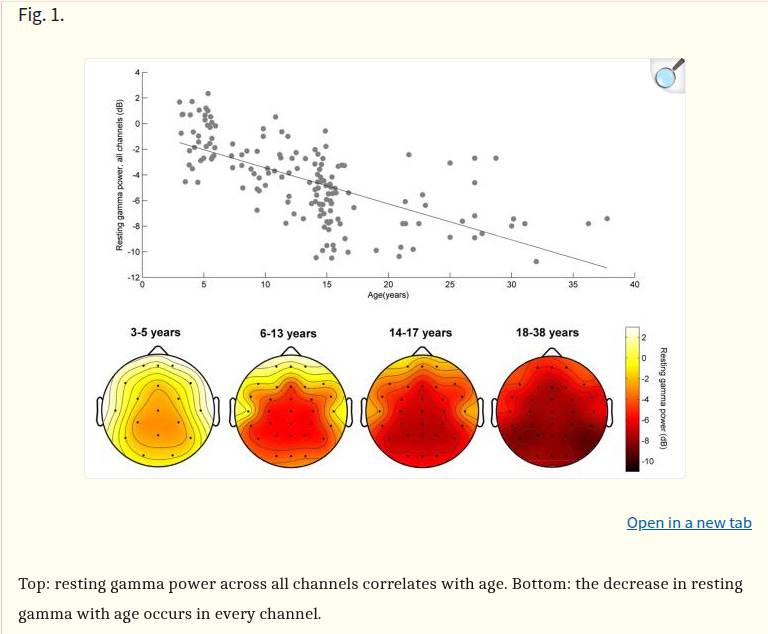
Children throughout history have reported interactions with the deceased and in more recent times detailed recollection of past lives. While parents might tend to discard these experiences as simply imaginary concepts conjured by their offspring, there appears to be some physiological correlates to their legitimate potential. Research indicates that prominent connectivity of the default mode network (DMN) generally begins to occur at the age of 7 years old (Fair et. al, 2008). It has also been documented that gamma oscillations peak at the age of 6 years old (Takano et. al, 1998, Tiernay et. al, 2013). This indicates that up until the age of 7, a child is maneuvering reality somewhat similarly to what a meditator or person under psychedelics might be experiencing. There lies the possibility that children are synthesizing endogenous psychedelics (DMT, 5-MEO, Bufotenin) at an accelerated rate due to the correlation between psychedelics and the effects of neurogenesis and neuroplasticity associated with early brain development. The rate of myelination of the central nervous system is at it’s peak during childhood years declining in adulthood (Schmithorst et al., 2002; Westlye et al., 2010; Lebel et al., 2012; Sexton et al., 2014). There is also evidence to suggest that the right hemisphere is dominant in children during their developmental years potentially coinciding with the lack of verbal acumen associated with the left hemisphere (Chiron et al., 1997; Lochy et al., 2019). It’s almost as if children lack the neural boundaries, a firm sense of self, and an ingrained belief system that adults have allowing them to tap into the ZPF in a very effortless and robust manner.
(Figure 1. from Tiernay et. al, 2013, gamma oscillations peak at 6 years old)
While children might naturally be inclined to develop significant PSI abilities if trained to do so, the issue of ethics regarding subjecting them to harsh, skeptic-happy conditions is an issue regarding prominent public display. It’s not an impossibility but it needs to be maneuvered extremely carefully and calculated.
Back to the DOGS.
A colleague of ours, Albert Chen is a co-founder of a social club in San Francisco known as The Modernist. Mr. Chen is a long-time practitioner of an energy healing modality known as Qigong. The interesting thing about this subject is that he has trained Qigong under extreme conditions including being perpetually hungover for many years. He also offers his energy healing services in non-traditional venues such as restaurants and bars. Albert doesn’t care if a person is skeptical or not… according to him he just pushes the energy… you feel it… and your pain dissipates. He credits his ability to operate under any circumstance due to his years of training under less than ideal conditions. Albert originally became enamored by Qigong due to a healing necessity in which he attempted numerous health modalities to address his back injury. After years of searching he came across a specific Qigong practitioner who effectively relieved the pain and subsequently enrolled in training under this teacher. There are preliminary discussions to have Mr. Chen studied in several labs in 2026.
While “energy healing” is less well defined as a pure PSI ability… it undoubtedly challenges the baseline perspective of academic neuroscience regarding a person’s conscious experience being contained by the skull.
Can a person objectively affect an object at a distance based on their intent?
We can.
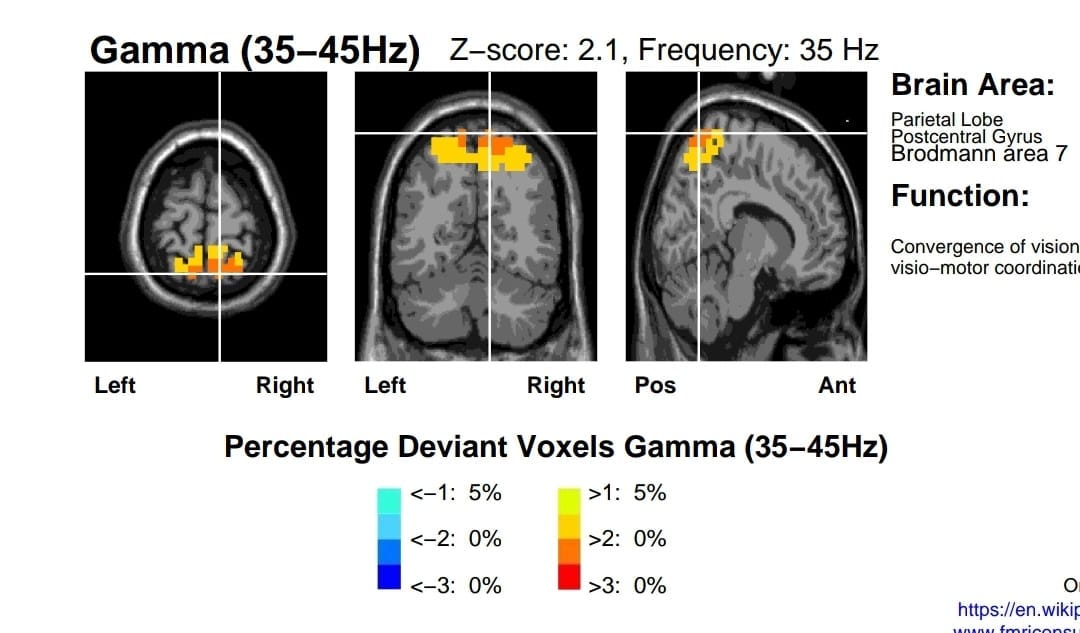
This is how we got started on this journey following a healing crisis that led to an immersion into the field of PSI. The picture below is an image of the baseline gamma activity of a subject wearing a 19-channel EEG cap resting in a chair with eyes closed.
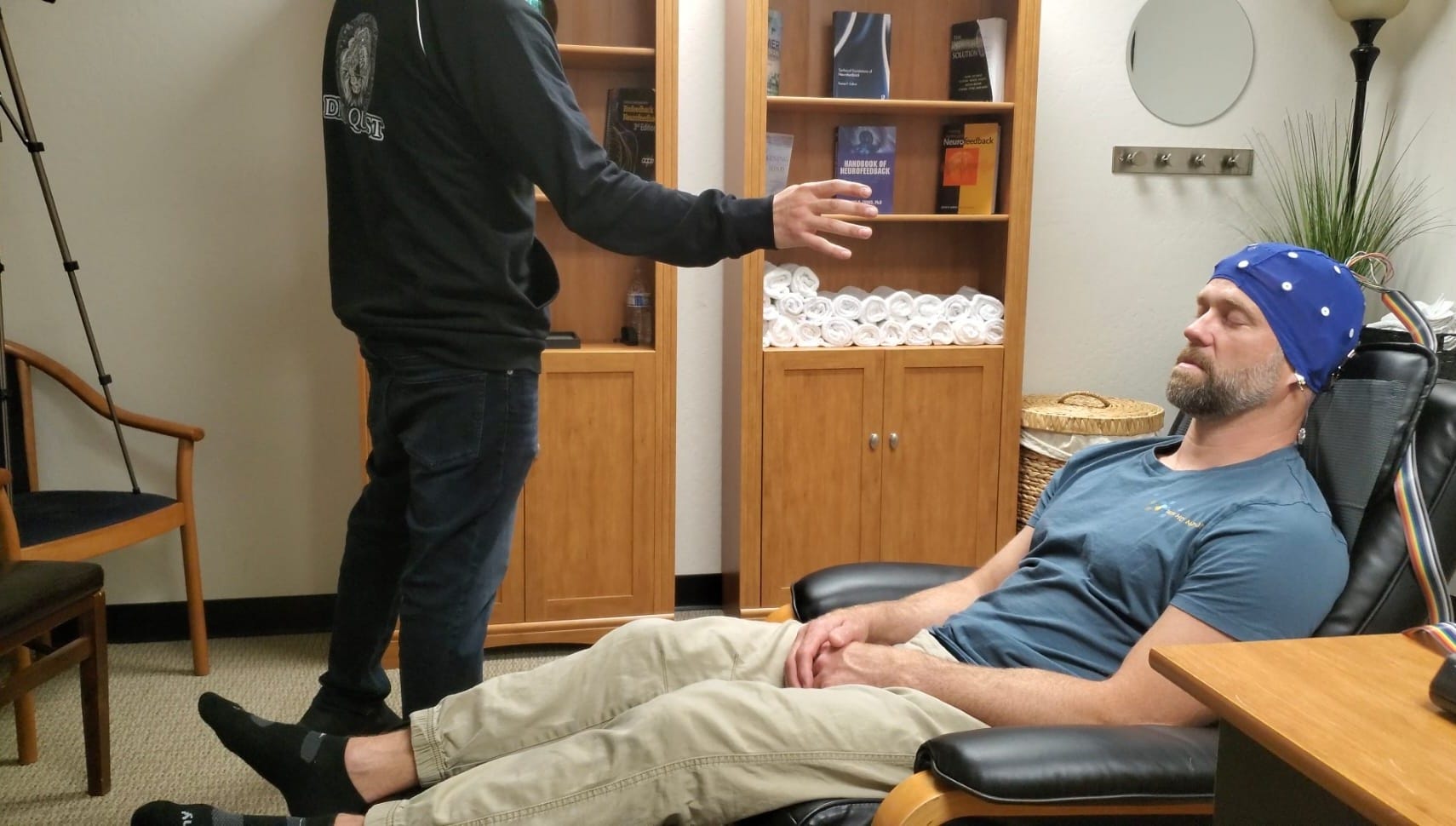
This picture is an image of us projecting our intent beyond our hand and into the middle of the subject’s head as they continue sitting with their eyes closed.
This picture is an image of the change that took place based on the intent from us in which the gamma activity in the prefrontal cortex changed quite significantly.
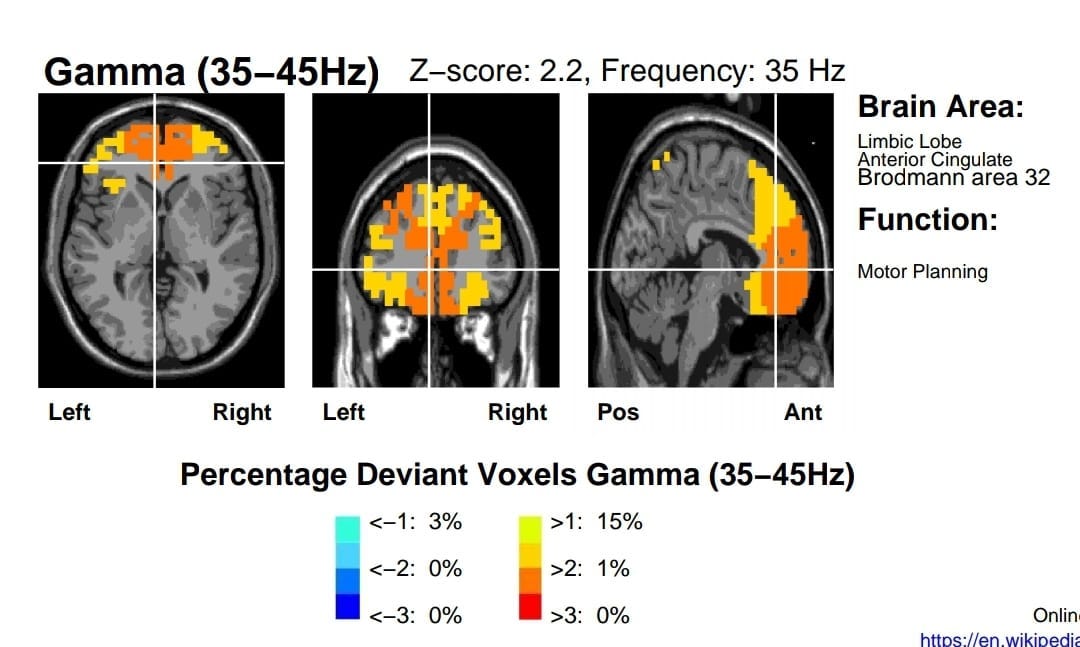
We have done the same effect regardless of whether people are skeptics, believers, or something in between. It is entirely irrelevant how they feel about the situation. We are not showing these images as proof of anything… they are more to create an initial signal that forms of PSI can possibly be captured using standard scientific equipment. In the future, we will eliminate the second subject and place electrodes on inanimate objects to measure the changes from “energetic projection”. Just to be clear… we do not consider ourselves to be DOGS being that we have no disciplined practice and are not focused on displaying PSI personally these days. However, we are interested in finding the DOGS throughout the world… we know they exist… and stress testing them to the fullest is of great interest.
Based on our conversations… the vast majority of DOGS out there have little interest in showcasing their specific PSI abilities for money or fame. For the most part it sounds like they all have similar initiatives of sages from the past such as Sathya Sai Baba, Jesus Christ, and the Buddha in terms of utilizing PSI display to draw attention to the magic of the natural world and finding the love in one’s heart. I happen to believe that the sensation of connectivity and love can assist in bringing about significant PSI displays. However, sometimes the DOGS have to develop a spiritual and energetic callous to push through the bullshit to get the job done.
MPI seems to be largely based on PSI being a separate layer of reality from our baseline consciousness. When we look at the subtle mechanisms of memory and precognition… we believe the contrary which is that our entire reality is based on the mechanisms of PSI and that the world is just largely unaware that we are swimming in an ocean of pure magic.
P.S. Just to be clear… we do not believe that PSI abilities should manifest easily with the general public. This would absolutely wreak havoc on everyday waking reality if one’s mind had a pronounced effect on every aspect of our lives without legitimate effort.
—
A recent piece from the substack Strange Loops in My Head titled, “Model of Pragmatic Information FAQ” outlines some key aspects of MPI in which we will address specific points that are pertinent to the discourse as follows:
2. What does MPI actually claim about psi?
Based on the model we subscribe to, we don’t view it as an “organizationally closed system” that correlates with baseline conscious experience that sometimes connects with “non-local entanglement correlations” for PSI experiences. Our perspective is that all experiences and information originate from the same exact place (ZPF) but the neural activity required to access the information is different. Theoretically speaking, those that can maintain the proper neutral activity to access the information source can tap into PSI at will.
3. What is “pragmatic information” and why does MPI care about meaning?
This definition of meaningful information would seem to be very subjective based on a person’s lived experiences. The concept of novelty and confirmation is valid but is very different between adults and children. It is rather well documented that children have quite rich inner worlds with many describing “invisible” friends, reporting visual perception of the deceased, and some vividly describe past life experiences. Theoretically if a child was nurtured in this environment, confirmation would make them more likely to develop PSI abilities and experiences as this would be considered pragmatic and meaningful to them. Prolonged environmental exposure of various kinds would seem to play a key role in the MPI model.
8. Why does MPI predict that strict replications and prize‑style tests mostly fail?
The manner in which PSI trials have been conducted plays a definitive role in terms of the effect size. Many of the trials include using metrics equivalent to correctly calling coin flips accurately over hundreds or thousands of trials. The issue with this type of design is that in some cases, PSI can be displayed in short bursts of hyper-focused concentration. To expect a subject to be able to display consistent PSI could be akin to a subject continuously doing their 1-rep bench press max. An example of a potentially more optimal design of a PSI experiment would be to create more longshot targets rather than prolonged testing sessions. For example, the odds of correctly knowing the results of a heads or tails coin flip is 1 out of 2. If a person were to correctly identify the results 20 times in a row, the odds would be 1 out of 1,048,576. The nearly equivalent to these odds would be identifying a 3 digit number, twice in a row (1 out of 998,001).
The researchers assume that the effort necessary to identify the coin flip is exponentially easier than identifying a random, 3 digit number but this isn’t necessarily the case in speaking with some of the DOGS. The effort seems to be rather equivalent based on direct feedback from some of these practitioners. Instead of the long, drawn out trials… the results could be distinctly different if the targets were much more “statistically” difficult over much less time.
As stated earlier, connecting to the field of information has the same mechanisms whether it’s considered PSI or not. The development of robust neutral pathways through constant repetition under various external influences is standard to develop expertise in any domain. MPI is under the assumption that PSI happens to go against the consistent observations regarding the effects of repetition on neurology. Novelty might be key in terms of experiencing spontaneous PSI but in the field of display based on diligent training, stripping away the novelty is key as it becomes second nature and becomes part of the default mode network which is the hub of the “organizationally closed” system.
9. How would skeptics naturally use the failure of a big prize test?
We agree that endless replication is an issue with generating robust PSI results. Our perspective is that the ability to hyper-focus has a limited time frame. However, that doesn’t mean that a middle ground cannot be agreed upon. For instance, the following are the demonstration odds presented by the Center for Inquiry to win their $500k prize: The first stage, called the preliminary demonstration, follows a protocol agreed to by both parties, and requires the applicant to beat 5,000 to 1 odds. The second stage, called the challenge test, follows a similar protocol, but has significantly longer odds, closer to one out of a million.
The one out of one million odds can be generated by correctly identifying 20 coin flips in a row spread over X amount of time or… it can be generated by correctly identifying a 3 digit number, 2 times in a row. Generating a robust effect in the time span of 3 minutes compared to 30+ minutes is very different in terms of maintaining hyper focus.
An optimally designed PSI display would consist of short bursts of robust signaling which would need to be agreed upon by all parties.
10. Are Cardeña’s meta‑analytic results in tension with MPI?
As stated earlier, short but statistically robust trials with difficult targets with long odds would be ideal for generating a large effect size.
It states that while the effects are small, the clearest results seem to take place in altered states in addition to generating the best results with specific, psi-conducive participants. This is precisely our perspective being that there is a robust consistency in neural activity and talented individuals that appear to correlate with PSI. Due to the laws of biology, if the precise neural activity is induced to generate PSI, maintaining this activity is essential for replication. This once again comes down to strengthening the neural networks associated with a specific PSI ability under very specific conditions (environment, targets, time).
There seems to be somewhat of conflict within the MPI conclusions in which they state that altered states and psi-conducive participants offer the best results. At the same time, it claims that PSI working as a robust information channel would conflict with the MPI model. In our eyes, this is conflicting being that there is no logical reason that an individual who trains diligently for a specific PSI display with specific targets to develop robust neural networks specifically related to the ability wouldn’t have a significantly greater level of success than an average person tested over long periods. These are the laws of virtually every type of endeavor in the world… whether it be athletes, academics, or even a chef who cooks the same meal 10,000 times. The majority of the average public will never put in the dedication to develop their neural circuitry to the point of expertise.
11. How does MPI explain the decline and displacement effects?
Our perspective is that the design of the trials could be tiring a subject out. This is why more difficult targets in a short time frame are ideal for robust PSI display. While observers cannot comprehend that a subject can exhaust themselves with mental exercises… try taking an SAT 3 times in a row. We guarantee that you will be bored and exhausted by the end.
12. Is MPI just an unprovable cop‑out / moving the goalposts?
”If someone produced a big, stable, on‑demand psi signal that survives endless replications under maximal documentation, MPI would be wrong.”
We agree that expecting a PSI practitioner to be able to display large, on-demand PSI signals that survives endless replications under maximal documentation would be nearly impossible. However, we do believe that the DOGS can display large, on-demand PSI signals with maximal documentation… just not under endless replications in one setting. We believe that the extensive replication can take place over time when the practitioner is feeling physically optimal. We wouldn’t expect a professional athlete to be able to perform at their best for an endless amount of time. We are of the belief that these robust displays of PSI are energetically draining to the subjects based on our interactions with them.
14. What about placebo effects (and homeopathy)?
MPI acknowledges that the placebo effect and related phenomena are classic psycho‑physical systems with strong meaning content: belief, ritual, relationship, diagnosis, etc.
We see no reason as to why PSI abilities fall clearly outside of this framework as there is much belief, ritual and relationship that fall within the development of PSI abilities.
15. Does MPI say psi doesn’t exist outside the lab?
We agree that spontaneous PSI effects in real-world cases outside of the lab is where many of the PSI experiences originate. Attempting to replicate them in the lab over lengthy trials will contribute to the dissipation of effect size.
16. How does MPI view poltergeists and séances?
Agree.
17. If no physics is violated, how could a table ever levitate in a séance?
Agree.
18. Could Fatima‑type apparitions or UFO lights fit MPI without breaking physics?
Agree.
19. Does MPI allow “skill‑based” psi in real life?
MPI states that it expects PSI competence to show up in a modest manner in private settings with low scrutiny and modest documentation. However, it also states that this competency won’t survive being turned into a public, repeatable signal under hostile or forensic conditions (NT axiom).
NT Axiom: Any attempt to use a non‑local entanglement‑correlation as a signal makes the correlation vanish or change unpredictably.
We challenge this being that the number one fear in the world behind death is public speaking. Being in front of a crowd is a difficult endeavor for the majority of people so this aspect has nothing to do with PSI. Being in front of a hostile crowd is an even larger mountain to climb for someone to display anything… unless they have trained to do so.
When Steph Curry (or any other basketball player) is able to score effectively against a rival team on their home turf in front of hostile fans… it’s not because they practice incessantly in the gym. It is because since these players have been in middle school, they have played thousands of games in front of hostile crowds. There is an underlying level of training that is separate from the strict mechanics of the specific ability of playing basketball. They have learned to develop the neural circuitry to overcome the environment to perform what they do daily in the gym. The same goes for boxing where gym fighters who can dominate everyone in the gym, including world champions fail to perform similarly under the bright lights. Most subjects are not inherently comfortable in the spotlight.
As far as we are aware, the majority of PSI programs do not specifically train for public display under simulated hostile environments.
As we stated earlier, we disagree with MPI that the mechanisms of tapping into PSI abilities are entirely separate from that of normal cognition. We do comprehend that the oscillatory patterns for stable connection with PSI must be developed, trained, and practiced under a wide array of conditions, including hostility to retain high replication abilities.
Just because something isn’t easy doesn’t mean that it’s impossible.
20. Why wouldn’t that skill survive a TV test or big public challenge?
MPI states that PSI skill would fail to survive a TV test or big public challenge because the meaning-structure changes from “our practice” to “my performance under judgment” with reputations and money at stake. We challenge this notion because that depends entirely on the individual and as to why they are motivated to display the ability.
Is it because they want world recognition, fame, and money?
Or is it because they want the world to be exposed to the fact that there is more to life than the material world and in doing so have the intent to help the masses?
MPI assumes that the meaning-structure distinctly changes for people who attempt or would attempt to display PSI publicly which we believe is a flaw in the model.
MPI states that heavy controls, cameras, and repeated runs max out documentation and drain novelty, the two things psi needs. We disagree in the sense that maxing out documentation in a lab study and displaying a difficult, short-term PSI display are different. MPI has difficulty clearly differentiating between the effects of mass meta-analysis with long trials compared to short-term displays by individuals who have specifically trained for the specific event.
One of the concepts we are proposing is that depending on the event… Let's take “mindsight” for instance, that the subject could wear earplugs and a blindfold to essentially shield them from the external environment. As long as the required PSI exhibition would take place within a specific, shortened time frame with long shot odds to display a robust signal, the external issues could be overcome.
It’s all about training in diverse environments and developing the robust neural circuitry to more easily access the ability in a reliable, timely format.
21. What about a small, private demo for sincere skeptics – is that compatible with MPI?
MPI states that due to high novelty, high dimensionality, and moderate documentation, it presents a good regime for sizeable effect. It continues with… “MPI has no problem with skeptics having a personal “holy shit” moment. The theory only breaks if you can turn that into a stable, broadcast‑quality signal that works on demand under strict repetition.”
Once again, we believe that a stable, broadcast-quality signal is entirely possible. Not necessarily a signal that is 100% but something that can be considered to be above 75% depending on the PSI display (some will be more difficult than others). However, the terms “on demand” and “under strict repetition” are not well defined. If MPI is stating that their version of “on demand” is that a person should be able to display their PSI skill set at any moment in time under any conditions regardless of physical condition, mood, and emotions we agree that this is not realistic. However, that doesn’t mean that a stable, broadcast-quality signal cannot be generated altogether. If a person states that they need 20 minutes to access their proper neural state to access the PSI ability we believe that this should be considered the equivalent of “on demand”.
The term “under strict repetition” is not well defined by nature. How much repetition is needed for perceiving 3 digit numbers? If a person can successfully perceive four, 3 digit numbers in a row… that is equivalent to roughly 1 out of 1 trillion odds. A display such as this could be carried out within a span of 5 minutes or less.
Then what?
When would the “strict repetition” need to take place? In 5 minutes? in 5 hours? in 5 days?
We are of the perspective that if the PSI subject is given ample time to recover according to the subject themselves, then strict repetition is not a problem. However, if the PSI subject is requested to perform their display based on the researchers request for timely repetition, this is another factor that has less to do with PSI ability but rather physiological and neural tiring. There should be differentiation between these aspects in the MPI model.
22. Why does MPI say documentation and recording can suppress psi?
We believe that since much of the robust PSI research includes many trials involving a wide array of subjects with a wide range of experiences and inherent PSI abilities, the effect is reportedly smaller across the general population. This is obviously very different from a highly skilled practitioner or group of highly skilled practitioners that train for a specific event for years.
Like anything, this is the law of averages that pertain to virtually any subject, not just PSI. If you were to take the statistics of all the football players in the world, they would be significantly different than if you took the statistics of only NFL players let alone the statistics of solely the Superbowl champions.
23. Does it matter if the subject knows they’re being recorded?
Most people doing regular things do not like to be recorded on camera. When on camera it effects peoples behaviors and their subsequent actions. PSI is no different in this case with some subjects being less camera shy than others.
25. What kinds of experiments does MPI recommend instead of classic proof tests?
We like the ideas proposed due to their suggestions to correlate mood, personality, and other variables that differentiate between meaningful sessions and controls. The addition of measuring motivation and feedback are solid as well.
The main aspect that we like to stress is that the experiments should be shorter in time frame and difficult targets with long odds rather than coin-flip type studies that take place over many hours and days.
26. How is MPI more radical than just “psi is a weak signal”?
We appreciate MPI’s take regarding the idea that “reality isn’t just particles + forces + noise; it’s also stories and structures that shape which coincidences occur. Psi is one visible edge of that deeper structure.”
However, we feel that PSI is a visible edge that can be developed to a very high degree for the DOGS that becomes enamored with it.
28. How does MPI treat mind and brain?
We agree with the sentiments here. However, we do believe that MPI doesn’t strongly identify the neural correlates of altered states, the effects of training on neurology, and the ability to integrate PSI-related neural networks into the default-mode network making these abilities part of the organizationally closed-loop system.
29. So is MPI saying “reality cares about stories”?
Agreed.
30. Did Lucadou build MPI mainly to avoid the paradoxes you’d get if psi were a real signal?
Need more digestion on this concept.
31. Is there experimental evidence for MPI, or is it just a nice story?
“MPI is a high‑level pattern theory, so you don’t “prove” it with one killer experiment. But several lines of data match exactly the kinds of patterns it predicts – especially decline, displacement, and correlation‑matrix (CMM) effects.”
We appreciate this and agree with it’s accuracy when analyzing large datasets within the field of PSI. In fact, we believe that the analysis can likely be applied to various datasets outside of strictly PSI as well.
However, we believe the flaw in this model is that it has limited utility regarding a public display of PSI by high level practitioners due to it’s primarily high-level focus of the industry. In addition, having been originally generated in 1995, it doesn’t include much of the advances in neuroscience over the past 30 years which allow us to differentiate specificities within altered states of consciousness and physiological attributes that differentiate those with greater PSI potential compared to those without.
32. Bottom line: what attitude toward psi does MPI recommend?
We appreciate MPI’s attitude in general. We believe that it is an elegant perspective and presentation of PSI that skeptics and academics would be more open to acknowledging than other models.
However, we do not agree with this statement: “Drop the fantasy of a future smoking‑gun machine that will prove psi to everyone via a perfect, endlessly repeatable signal.”
Once again, we are not claiming that a “perfect, endlessly repeatable signal” equates to a smoking-gun machine. This is somewhat hyperbolic in terms of the nomenclature. We do not expect the most skillful PSI practitioner of a specific ability to have a perfect, endlessly repeatable signal. Even Michael Jordan missed free throws every now and then. Nevertheless, based on the data generated by modern neuroscience which has given us deep insights into the neural correlates of altered states, there is no reason to believe that a person couldn’t train themselves to perform a specific PSI ability publicly under rigorous conditions if the time allocated for it was agreed upon by all parties.
We are more focused on the effects of altered states, their ability to tap into the field of information in an enhanced manner, and the potentiality of developing training protocols to truly stress test the MPI model regarding signal stability.
Nice discussion of the expert-talented+trained-psi-practitioner with signal perspective. The jury is unfortunately still out after all these years and experiments def should continue probing in both directions. I think the framework fits well with my intuition and the overall data. If it's proven wrong, that's very interesting as well as it means an extraordinary new causal mechanism has been revealed to the world. One of the things I think that is important though in the meantime is to disseminate this minority MPI view to the public, skeptics and psi researchers. The reason being is that we want to be able to recognize and acknowledge the beauty, legitimacy, intensity of these real anomalous phenomena (eg. non-speakers) regardless of what happens inside the lab or demonstrations. MPI is unfortunately pretty nuanced and complex though, so may be quite hard to do.